
We Won Because We Organized. Now Let’s Build It Into Every California Classroom.
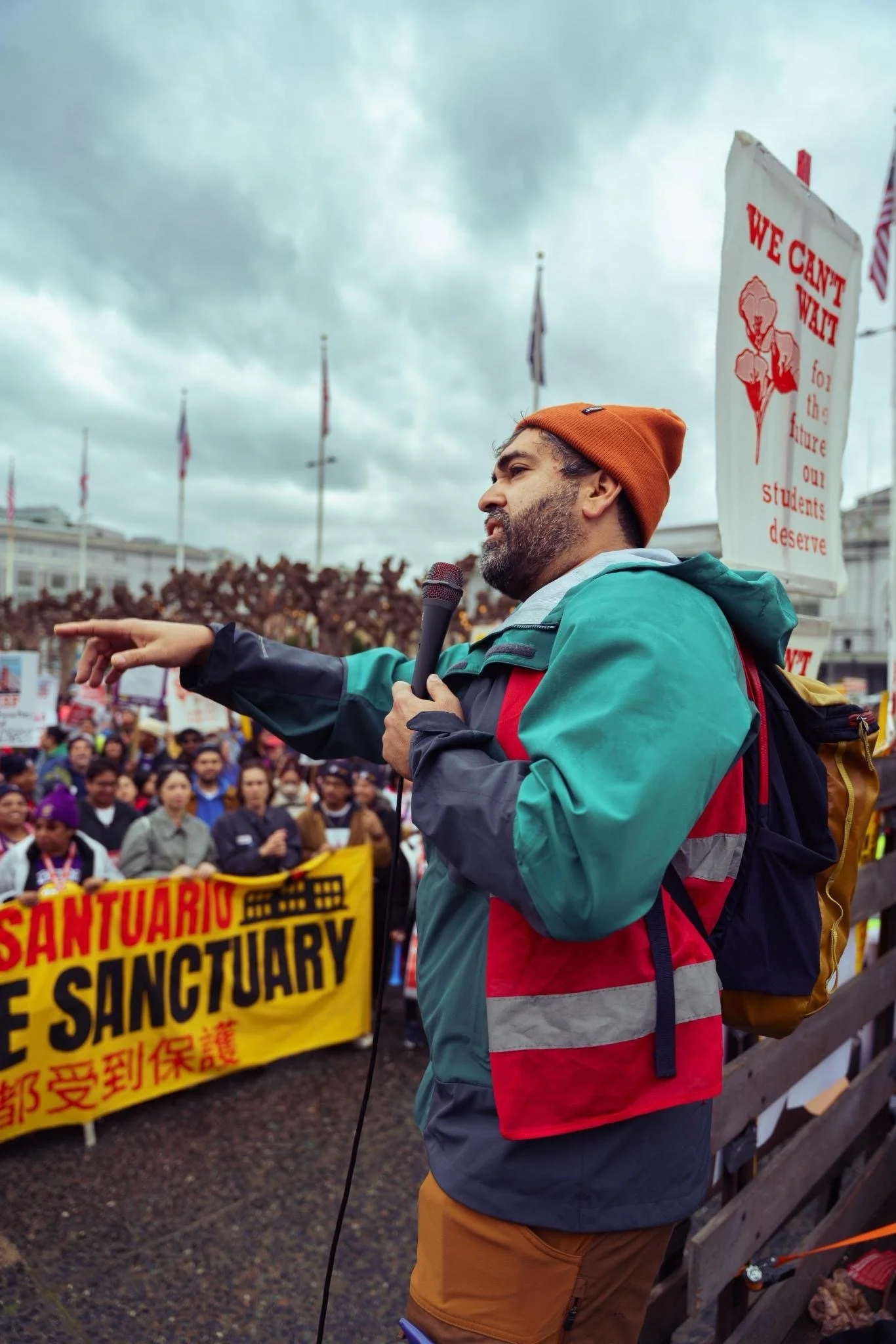
Frank Lara UESF strike 2026
After four days on strike, San Francisco educators won a contract that didn’t just meet our demands, but made history. In the early hours of February 13, the United Educators of San Francisco (UESF) bargaining team confirmed what we already knew: our collective will, our unbreakable solidarity, and the deep support of our students, parents, community, and union siblings forced the district to deliver on every key demand we brought to the table.
This wasn’t handed to us, we all fought for it. At 130 picket lines across the city’s 49 square miles, in the rain and sun, before sunrise and into the evening, we had more people come every day. Why? Because we know what our schools need, we know what the district has, and we refused to settle for anything less.
For 10 months the district told our educators and bargaining team that it had nothing, that the contract had to be “cost neutral”, and that our common good demands “didn’t belong in the contract”. As I said to the Board of Education in December, our district is not a bank; we need to use today’s dollars on today’s students. This means using the money we have to ensure we have the best educators in our classrooms, and that those hired will stay. Those of us who interact with school sites daily, whether as a parent, student, or educator, know how important stability is. Our bargaining team members and leadership held strong and reminded us that we were not asking for too much. Having the solidarity of all the unions across the district fortified our power and built a stronger community. The district has the resources to meet our demands and if we stood together we could achieve it.
From the moment UESF announced the strike date, the tenor of the district shifted. Nearly overnight, what the district had said was off limits, got finalized. We were immediately able to secure one of our common good demands, Sanctuary Schools. This guarantees that we’re a sanctuary employer, which means our schools are protected from ICE entering campus, and that our staff will receive training on sanctuary policies and more. We also won our other common good demand that preserves emergency shelters for our families.
The contract also secures fully funded healthcare for all employees and their families, beginning at the start of next year, which will bring between $700-$1500 more a month into members' pockets each month due to the rising costs of health insurance. We know that this will not only help us to retain educators but also attract educators from surrounding districts helping to stabilize our schools. To read more about the wins we achieved, visit https://uesf.org/news/bargaining-updates/.
The agreement now goes to the membership for a vote. Already, educators across the city and supporters of public education nationwide are celebrating.
Everyone in San Francisco will remember this victory was not handed to us. This victory was forged in the heat of sustained, collective action. While we weren’t teaching in classrooms, we were learning incredible lessons about civics, community and advocacy. We were living history in the making. On February 11th, a delegation of high schoolers (and one middle school student) marched into the building where bargaining was happening. They asked to speak with Superintendent Maria Su. Although she agreed to meet, she sent a representative instead of attending herself. But the students didn’t back down. They took the mic and stood up to defend their classmates, their siblings in special education, their parents and family members who are educators, and all of the teachers at their schools. They were doing this from a place of love and conviction because this fight is personal. This fight is for their education, for their friends, for their family, for their future, and for their community. As a parent, as an educator, as a union leader, I was overwhelmed with pride for these brave kids.
During the four-day strike, every neighborhood in San Francisco saw us and joined us. Parents, small business owners, neighbors, and faith leaders all showed up - not as spectators, but as participants. We had community members offering coffee, opening their homes so educators could use the bathroom, and even joining in our chanting. Businesses were donating food and beverages to keep us going. Most importantly, we had students of all ages, from three to 22 showing up and making their voices heard. They understood that this wasn’t a disruption; it was a fight for the future of San Francisco.
I have heard many people say that something cracked open during the strike. It felt like “the old San Francisco”, before so many of us had been pushed out, the San Francisco where the working class still felt like it belonged. UESF won incredible, life-changing improvements, but this is also a turning point for our workers, our city, and our state.
Because we’re not finished.
Will this city be for the billionaires? Or will it be a city for us, where working families can afford to live, can afford healthcare, where students can learn without fear of deportation, and where public education is protected, not privatized? The billionaire class doesn’t want public schools. They want charter franchises, privatized systems, and educators treated like disposable contractors. They want to slash funding, underpay workers, and turn public goods into private profits. We’re saying: enough. No more crumbs. Education is under attack in San Francisco, California, and all across this country.
Tens of thousands of educators across California are continuing to mobilize with the same demands, the same unity, and the same unshakable belief that public education must be protected and properly resourced. We’ve proven that when we use the power of our labor to shut down business as usual, when we fight, we win.
I’m running to bring that power to every classroom, every district, every child across California. As Superintendent of Public Instruction, I will fight to make the wins we secured in San Francisco the standard, not the exception.
Because I know, from the picket line, from the bargaining table, from my own kitchen table, justice doesn’t get handed down from the top.
Justice comes from us.